

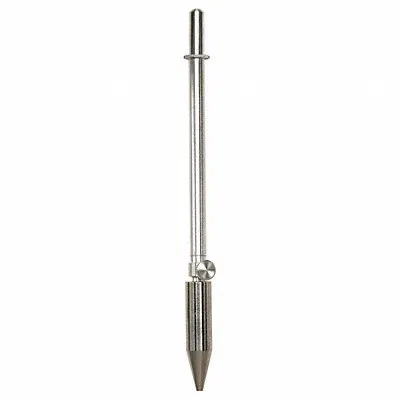
PENETROMETER FOR BATTERY PASTE
Model Number : TM-044BB
Battery Paste Penetrometer with cone, which has a hardened steel tip with a special plunger. Total needle weight is 60g ±.050g.
The penetration test for battery paste is typically carried out to measure the consistency and workability of the paste. This test helps in ensuring that the paste has the right consistency for uniform application during battery plate production.
Standard for Penetration Test of Battery Paste
There is no specific international standard solely dedicated to the penetration test for battery paste, but the procedures generally follow the guidelines provided in the standards for battery materials and testing, such as ASTM standards or other industry-specific guidelines. The exact procedure can vary depending on the specific battery manufacturer’s internal standards or guidelines.
Important Specifications of the Penetrometer:
- Penetration Scale: The penetrometer have a penetration scale that can measure the depth of penetration in tenths of a millimeter (0.1 mm).
- The Penetrometer with micrometer adjusts for accurate settings as well as coarse adjustment for approximate settings. Only one additional 50g loading weight is included.
- Cone Dimensions: The cone used for penetration have a standard size and weight. cone has a hardened steel tip with a special plunger. Total needle weight is 60g ±.050g.
- Load and Duration: The penetrometer is capable of applying a specific load/force for 5 seconds, this can vary upto 99.9 seconds.
- Measurement Accuracy: The penetrometer has a measuring accuracy ±0.1 mm, to ensure precise measurements.
- Temperature Control: The test should be carried out under controlled temperature conditions, as temperature can significantly affect the consistency of the battery paste. The temp. control water bath is available at extra cost
Temperature for Conducting the Test:
The penetration test for battery paste should generally be conducted at a controlled room temperature, typically around 25°C (77°F). This is because temperature fluctuations can impact the viscosity and consistency of the paste. If the test is conducted at a different temperature, it should be noted, and the results should be interpreted accordingly.
Additional Considerations:
- Humidity Control: In addition to temperature, maintaining consistent humidity levels during the test might be necessary depending on the paste formulation.
- Sample Preparation: The paste sample should be prepared uniformly and free from air bubbles or voids to ensure accurate results.