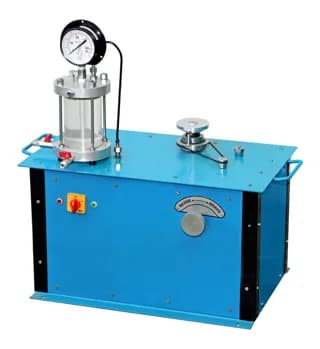
CONSTANT PRESSURE SYSTEM - (OIL WATER)
A constant pressure system in triaxial testing is a crucial component designed to apply and maintain constant pressure to the specimen, typically confining pressure (cell pressure) or back pressure, during the test. As per IS:2720(Part-11)
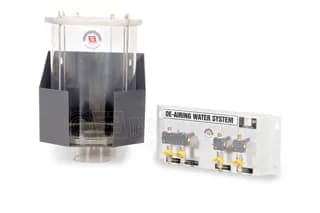
DE-AIRED WATER APPARATUS
De-aired water is crucial in soil and rock testing, especially for triaxial tests, to prevent inaccuracies caused by air bubbles. The presence of dissolved air can: Affect pore water pressure measurements, reduce sample saturation, Impact fluid permeability and disturb the effective stress principle: Accurate triaxial testing relies on maintaining proper pore pressures, which is not possible if air remains in the system. As per IS:2720(Part 11), ASTM D7181 , BS 1377-8,
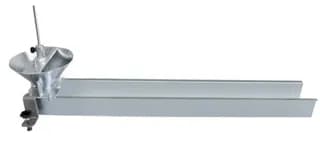
FLOW TEST CHANNEL FOR GROUT - DIN EN 13395
Also Called Grout flow through apparatus. The Flow Channel test helps assess the ease of flow and spreading ability of repair mortars and grouts, providing insight into their application properties and helping to ensure effective repair material choice in the field. As per EN 13395.
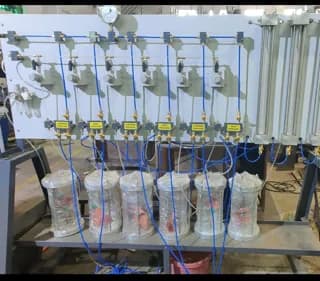
THREE CELL SATURATION WALL MOUNTING PANEL FOR TRIAXIAL SHEAR APP.
As per ASTM D4767/ IS 2720 (Part 11)/ BS 1377-8. The Three-Cell Saturation test is a critical preparatory step for triaxial shear testing, It is essential for accurately determining soil or rock samples' shear strength under controlled saturation conditions.
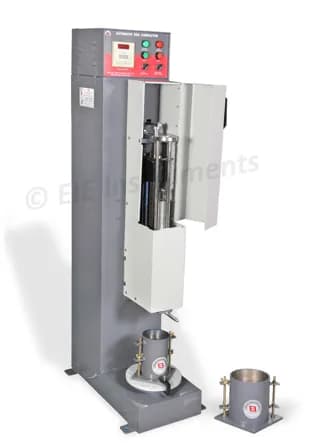
AUTOMATIC SOIL COMPACTOR FOR PROCTOR AND CBR TEST
Automatic compactors are essential in geotechnical engineering for conducting Proctor compaction tests, which determine the optimal moisture content and maximum dry density of soils. These devices ensure uniform and repeatable compaction, reducing manual effort and enhancing test accuracy. With Digital Automatic Blow Counter and Controller. As per IS:2720 (Part 7 and 8)
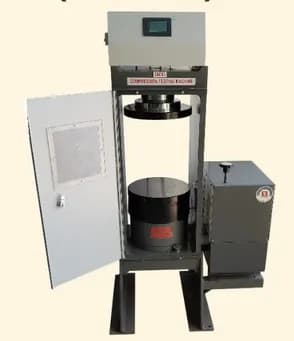
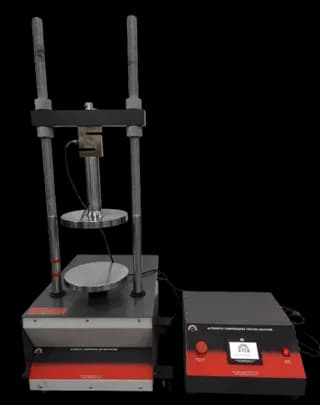
COLD CRUSHING STRENGTH APPARATUS - IS 1528 (PART IV)-
The Cold Crushing Strength (CCS) Apparatus is specifically designed for testing refractory materials, which are used in high-temperature industrial applications (e.g., furnaces, kilns, etc.).A steadily increasing compressive load, at a specific rate is applied perpendicular to the largest flat faces of the specimen using a CCS apparatus. The load is applied until the specimen fractures. The maximum load at fracture (cold crushing strength) is recorded and calculated as a compressive strength value in MPa (or N/mm²). As per IS IS 1528 (Part IV)/ASTM C133/ISO 10059-1/ ISO 8895/ EN 993-5/JIS R2206.
COLD CRUSHING STRENGTH (CCS)APPARATUS - (ISO 4700, ASTM E382)- SERVO CONTROLLED
Ref. Standard - ISO 4700, ASTM E 382. Determination of Cold Crushing Strength (CCS) of iron Ore pellet fired at different temperature. This machine is mainly used in crushing strength test for iron ore pellet.
COLD CRUSHING STRENGTH APPARATUS - (ISO 4700, ASTM E382)
The CCS test evaluates the material’s strength under a controlled compressive load, providing information on its durability and resistance to mechanical stress during use. The test involves applying a steadily increasing force until the material fails, recording the peak force (in MPa or N) just before crushing occurs. Determination of Cold Crushing Strength (CCS) of iron Ore pellet fired at different temperature. This machine is mainly used in crushing strength test for iron ore pellet. As per ISO 4700:2015 • IS 8625 : 1986 • ASTM - E382-20
MERCURY 250GM
Manometer Liquid (Fluid): 250 Gram Pack