LABORATORY PULVERIZER
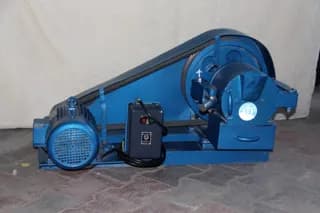
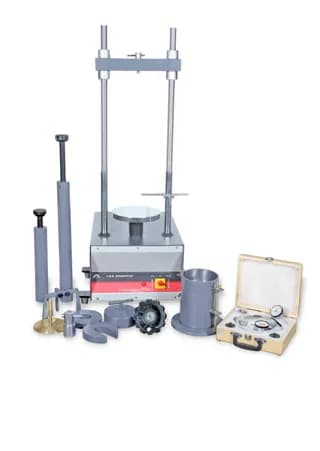
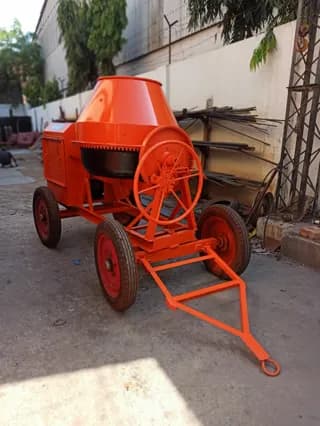
Laboratory pulverizer with L&T Starter is a disc type grinder, designed to grind virtually any material to produce a fine mesh sample in one operation.
ORIMET TEST APAPRATUS
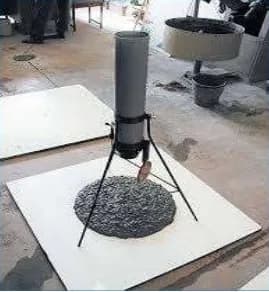
Made of steel with 600 mm tube length and 120 mm inner dia, fitted with a 70 mm orifice. The orifice is interchangeable as per test requirement. Provided with an extendable tripod for stable use. Supplied with 2 nos. 10/12 ltrs heavy mild steel buckets for filling and collecting Orimet. Also available in full S.S.construction.
CAPPING SET - VERTICAL
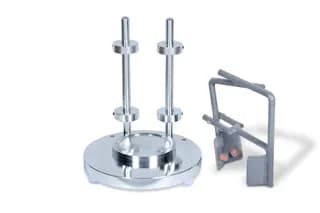
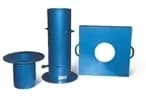
As per IS:1199(Part-5). Complete with Cylinder capper and Capping plate for concrete blocks.
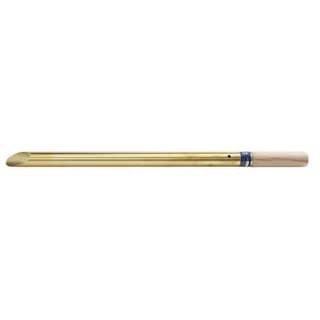
CEMENT SAMPLER FOR BAG - IS:3535
As per fig.2 of IS:3535-1986 (R.A.2018)
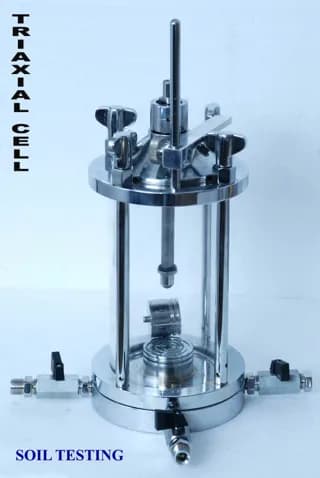
UNIVERSAL TRIAXIAL CELL
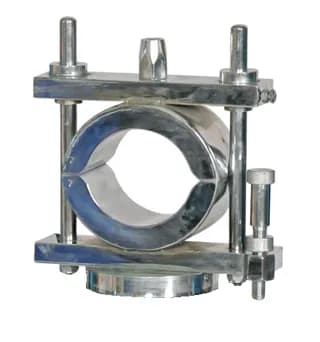
For testing of cylindrical specimens of 38mm, 50mm, 75mm, and 100mm diameter with corresponding length to diameter ratio 1:2 as per IS:2720 part XII.
CBR/PROCTOR RAMMER-2.6 KG
As per IS:2720 and IS:9198.
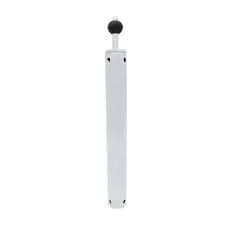
PROCTOR COMPACTION RAMMER-4.9 KG
As per IS:2720 (Part VIII) and IS:9198.
SOIL HYDROMETER-(ASTM D422)
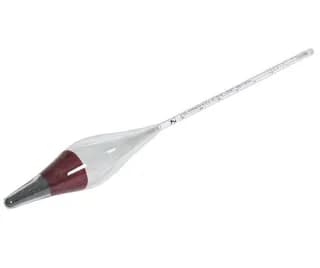
The hydrometer test is used to measure the distribution of fine particles (clay and silt) in soils that are too small to be measured accurately using sieves. It is used to determine the percentage of different particle sizes, usually in the range below 75 μm (silt and clay). As per ASTM D422, AASHTO T88, IS 2720 (Part-IV)
RELATIVE DENSITY APPARATUS
The relative density test apparatus, as per IS 2720 (Part 14) and equivalent international standards such as ASTM D4253 and ASTM D4254, is used to determine the relative density (or density index) of granular soils. This test helps measure the in-situ density of granular soils (such as sands and gravels) in relation to their maximum and minimum densities, providing essential data on soil compactness and potential settlement behavior.
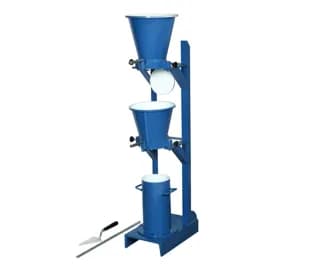
COMPACTION FACTOR APPARATUS - IS 1199
AS PER IS: 5515: 1199. The apparatus consist of two conical hoppers and a cylinder, mounted on a rigid metal frame. The lower openings of the hoppers are fitted with hinged trap doors for release and during the fall of the material. Complete with trowel and tamping bar 0‑60 cm long X 16mm dia.
TAMPING BAR - IS:516 PART 6
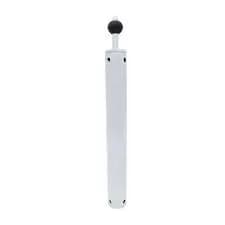
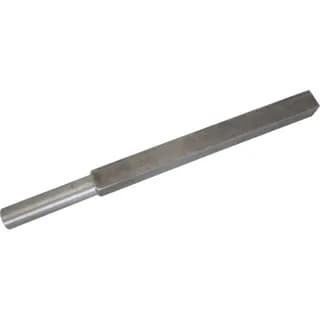
A straight compacting bar made of steel having a rectangular shape of approximately 25 mm × 10 mm, a length of approximately 600 mm and with a ramming face square with the axis.
VIBRATING HAMMER - PORTABLE
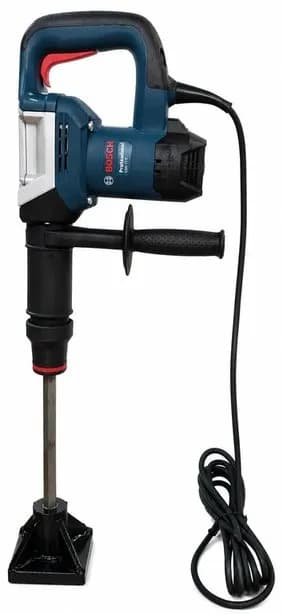
Used for the compaction of concrete specimens. Using the appropriate tamping foot, it can also be used for compacting concrete cube. As per MORTH Section 903.5.1.1., the hammer will be fitted with a square or rectangular foot having an area between 7500 to 14000 sq.mm.
ELECTROMAGNETIC SIEVE SHAKER
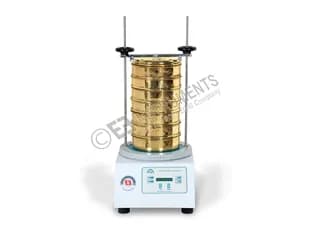
An electromagnetic sieve shaker is a sophisticated laboratory instrument used primarily for particle size analysis by utilizing a set of standardized sieves. This device is essential in fields such as construction, pharmaceuticals, food processing, and materials science.
FIELD DENSITY TEST APPARATUS
The Sand Pouring Cylinder Apparatus, available in small, medium, and large sizes, is used to determine the in-situ density of soils by the sand replacement method, conforming to IS:2720 (Part 28). Each set is supplied with a sand pouring cylinder fitted with a conical funnel and shutter, a calibrated cylindrical container with flange, and a metal tray with a central hole, ensuring accurate and repeatable test results in field conditions.
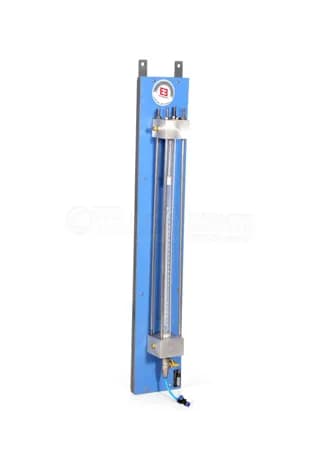
VOLUME CHANGE GAUGE - SINGLE
The volume change gauges are designed to measure changes in volume of specimen, measured in terms of the change in the volume of the cell, during a triaxial shear test. The apparatus consists of an outer acrylic tube and an inner graduated glass burette held between two blocks. Manifolds are provided to enable water, either to pass through the tubes during measurements or to go direct to the cell when no measurements are required. As per IS 2720 (Part 12)
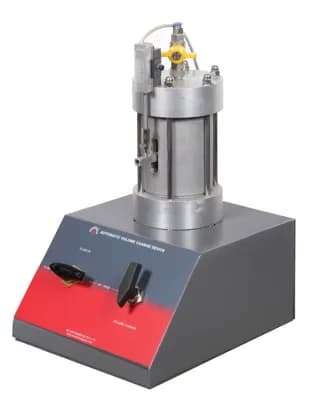
AUTOMATIC VOLUME CHANGE DEVICE
The apparatus is used for measuring the volume change of a soil sample by monitoring the flow of water through the chamber of the unit. The lower assembly contains changeover valves, which when used in conjunction with the upper assembly provides limitless capacity. The unit can be used with a linear strain transducer, a digital indicator, or as part of an automated system. It is accurate to better than ±0.01 ml and is easily de-aired in seconds. Includes connectors, valves, and tubing.
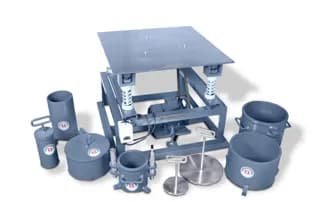
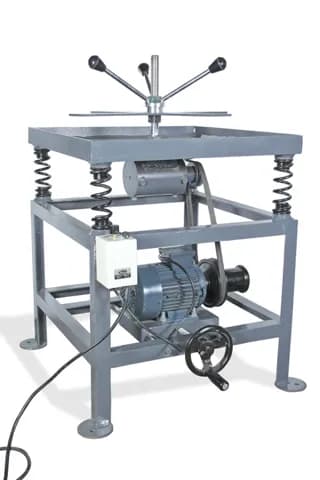
VIBRATING TABLE - 150 X 200 CM
For compaction of concrete cube, beams and cylinders. Operation on 440 V, three phase, A.C. supply.
ABRASION RESISTANCE OF CONCRETE - ASTM C1138
The underwater abrasion resistance test (ASTM C1138) evaluates the durability of concrete surfaces when exposed to hydraulic forces and suspended abrasive materials, as commonly encountered in hydraulic structures. The test quantifies the abrasion resistance by measuring the mass loss of concrete specimens subjected to a rotating propeller in water containing abrasive particles.
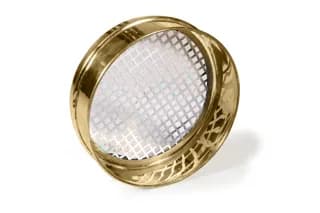
FINE SIEVE SET - 20CM DIA - SET
Seamless Brass frame, set consist of 8 sieves - 10 mm, 4.75 mm, 2.36 mm, 1.18 mm, 600 micron, 300 micron, 150 micron, 75 micron and a set of Lid‑Pan.
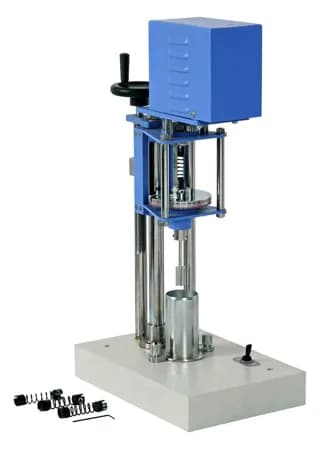
LABORATORY VANE SHEAR APPARATUS
Vane shear test is a useful method of measuring the shear strength of clay. It is a cheaper and quicker method. The test can be conducted in the laboratory. The laboratory vane shear test for the measurement of shear strength of cohesive soils, is useful for soils of low shear strength for which triaxial or unconfined tests can not be performed. The test gives the undrained strength of the soil. The undisturbed and remoulded strength obtained are useful for evaluating the sensitivity of soil.
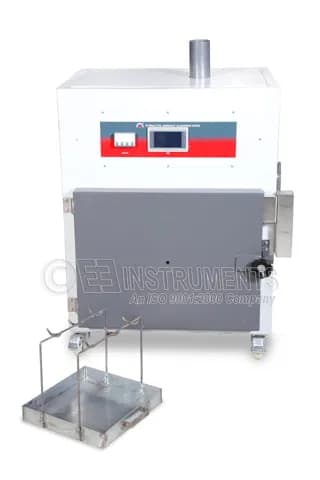
PYROLYTIC ASPHALT CLEANING OVEN
The pyrolytic oven is widely used in laboratories for solvent-free cleaning of glassware and other lab equipment. This type of oven operates by heating materials to high temperatures to burn off organic residues, including asphalt, oils, or chemical remnants, making it especially useful for delicate or intricate lab items where solvent-based cleaning might be unsuitable.
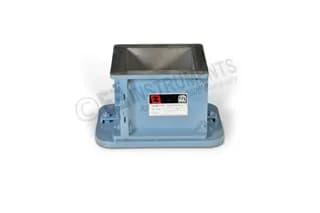
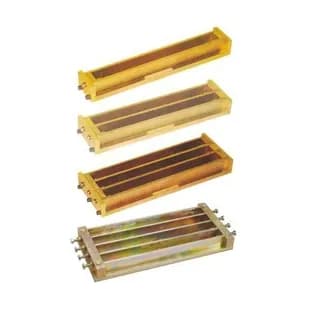
SHRINKAGE BAR MOULD
High-precision Shrinkage Bar Mould used for casting cement and aggregate specimens to determine potential expansive alkali reactivity. Made from durable mild steel with accurately machined faces, tight fittings, and a firm assembly. Available in single, two, and four-compartment models mounted on a rigid angle base plate. Supplied complete with base plate and stainless steel reference points. Standard sizes: 75×75×300 mm, 25×25×282 mm, and 75×75×285 mm.
V FUNNEL TEST APPARATUS (ACRYLIC)
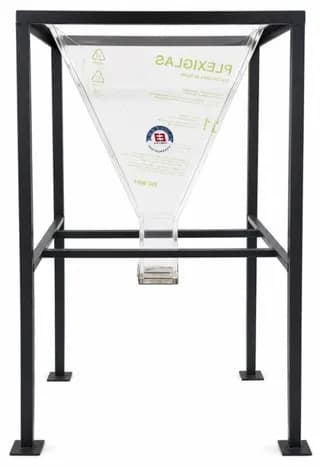
The V‑ Funnel flow time is the period in which, a defined volume of SCC (self‑consolidating concrete) needs to pass through a narrow opening and gives an indication of the filing ability of SCC, provided that blocking and or segregation do not take place. The flow time of the V‑Funnel test is to some degree related to the plastic viscosity.
Shrinkage Limit Set With Mercury
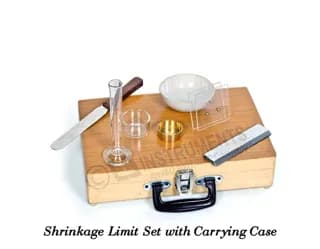
As per IS:2720(Part VI) and IS:10077. Complete in wooden case & with 750 gm Mercury.